
Dumpster Sizes
What Size Dumpster Do I Need? A Mooresville Homeowner's Sizing Guide
A Mooresville hauler breaks down how cubic yards translate to truck loads and bags, why weight limits matter more than volume, and which roll-off size fits your project and driveway.
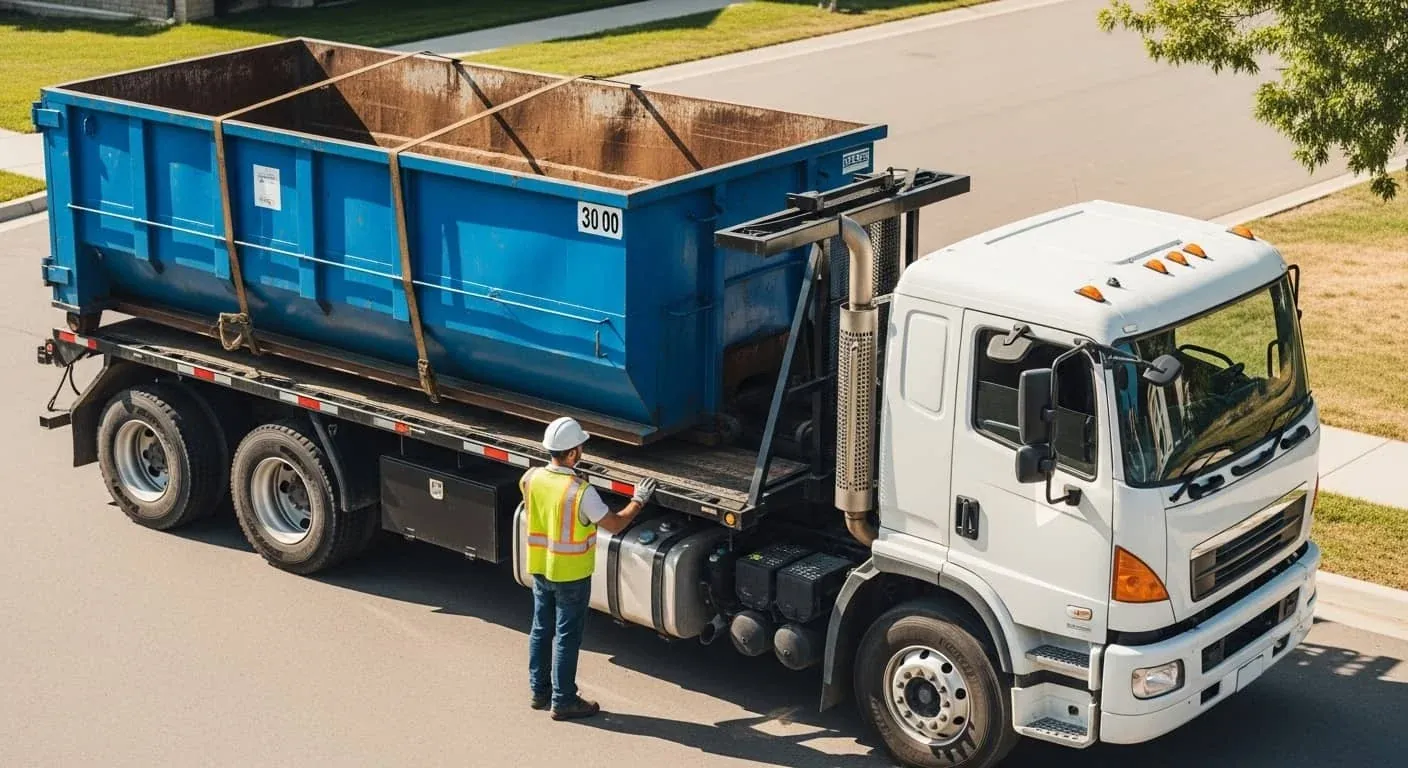
After thirteen years of setting cans in driveways from downtown Mooresville out to the end of the Brawley School Road peninsula, I can tell you the size question trips people up more than price does. Almost nobody has a gut feel for what 20 cubic yards of debris looks like sitting in their driveway. So let's translate the numbers into things you have actually handled, then match a size to your project.
What a Cubic Yard Actually Looks Like
A cubic yard is a box three feet on every side, or 27 cubic feet. That is the unit every roll-off is measured by, and it means nothing until you convert it into something familiar.
- Pickup truck loads. A full-size short-bed pickup filled level with the bed rails holds roughly 2 to 2.5 cubic yards. So a 10 yard is about four truck loads, a 20 yard is about eight, and a 30 yard is about twelve. If you have already made three trips to the transfer station and you are not close to done, you needed a can two days ago.
- Contractor bags. A 42-gallon contractor bag packed reasonably tight runs about a fifth of a cubic yard. Call it five bags per yard: 50 bags fills a 10 yard, 150 fills a 30 yard.
- Furniture math. A queen mattress and box spring, a sofa, a recliner, and a dresser together eat about 6 cubic yards before you have thrown away a single box.
Those conversions assume loose, uncompacted debris, which is exactly how it lands when you are pitching it over the side wall. Break down cardboard, nest buckets, and stand sheet goods on edge and you can gain 15 to 20 percent of usable space without paying a dime more.
Weight Limits vs. Volume: The Mistake That Costs People Money
This is the single biggest misunderstanding in the business. Every roll-off has two independent limits: how much space is inside it, and how much weight the truck can legally haul down NC-150 or I-77. Our flat rate includes a tonnage allowance, and the scale ticket at the landfill decides the rest.
A 20 yard box filled with couches, drywall scrap, and closet junk might weigh 1.5 tons and ride high to the transfer station. That same box filled halfway with red Piedmont clay, brick, or busted patio concrete will top 6 tons, and the truck physically cannot pick it up. I have had to leave cans on site while a customer wheelbarrowed material back out. Nobody enjoys that day.
Rule of thumb for our area: loose household junk averages 150 to 250 pounds per cubic yard. Construction debris with lumber, drywall, and trim runs 350 to 500. Roofing shingles run about 250 pounds per square (100 square feet) per layer. Clay soil, brick, block, and concrete run 2,500 to 4,000 pounds per cubic yard — which is why heavy material gets its own rules further down this page.
Footprint, Height, and Whether It Fits Your Driveway
Cubic yards tell you volume. Footprint tells you whether the thing fits between your garage door and the mailbox. Here is what we actually run:
| Size | Approx. Dimensions (L x W x H) | Pickup Loads | Contractor Bags | Typical Weight Allowance |
|---|---|---|---|---|
| 10 yard | 12 ft x 8 ft x 3.5 ft | ~4 | ~50 | 2 tons |
| 15 yard | 16 ft x 8 ft x 4 ft | ~6 | ~75 | 2 tons |
| 20 yard | 22 ft x 8 ft x 4.5 ft | ~8 | ~100 | 3 tons |
| 30 yard | 22 ft x 8 ft x 6 ft | ~12 | ~150 | 4 tons |
Notice that the 20 and the 30 share the same floor plan. The 30 is simply taller. That matters more than people expect: if your driveway can take a 20 yard dumpster, it can almost always take a 30 too, and the extra 10 yards of airspace costs less than a second haul. The walls do get taller, though, so heavy items have to go in first before the pile builds up.
The truck also needs room to work: roughly 60 feet of straight approach and about 23 feet of overhead clearance while the box tilts off the rails. Low limbs are the usual problem on the older shaded streets near Liberty Park. Power drops, basketball goals, and pergola corners are the others.
Tight Lakefront Lots and Newer Subdivisions
Mooresville has two driveway problems and they are opposite ends of the same spectrum. Older Lake Norman lots off Brawley School Road and Perth Road often have long, narrow, steeply pitched drives with a hard turn at the top and mature hardwoods overhanging both sides. On those, a 10 or 15 yard is frequently the only can that can physically get placed, even for a big project. We size down and plan a swap rather than fight a hairpin with a 22-foot box.
Newer construction off Langtree Road, in the Talbert and Curtis Pond corridors, has the reverse issue: wide but very short driveways, with the garage sitting close to the street. A 22-foot box plus the truck can end up hanging into the right-of-way. In those neighborhoods we usually place tight against the garage apron and load from the rear door.
Then there are HOA rules. Several Langtree-area and Brawley peninsula associations cap how long a container can sit — commonly seven to ten days — and require it to stay on pavement, never on turf or in the street. Check your covenants before you book, and if the can has to sit in the public right-of-way, review the requirements posted by the Town of Mooresville. We set boards under every can to keep the rails off your concrete, which we cover in our notes on protecting your driveway during delivery.
Size by Project: What We Actually Send
These recommendations come from thousands of real Iredell County jobs, not a chart somebody copied off the internet.
| Project | Recommended Size | Why |
|---|---|---|
| Single bathroom remodel | 10 yard | Tub, vanity, tile, and old subfloor. Tile and cast iron are heavy, so volume runs out last. |
| Kitchen gut (10x12) | 15 or 20 yard | Cabinets are bulky and light. Add the 20 if you are pulling flooring and drywall too. |
| Single-room cleanout | 10 yard | One bedroom of furniture, boxes, and closet contents fits with room left over. |
| Whole-house cleanout (3 bed) | 30 yard | Attic, garage, and every closet. Two 15s cost more than one 30 nearly every time. |
| Roof tear-off, up to 25 squares | 10 or 15 yard | Weight, not space, is the limit. One layer of architectural shingle at 25 squares is about 3 tons. |
| Deck demo (12x16) | 15 yard | Pressure-treated lumber is dense and wet. Cut boards to 4 feet or shorter to load efficiently. |
| Two-car garage cleanout | 15 or 20 yard | Shelving, lawn equipment, paint-free scrap, and the workbench nobody has touched since 2019. |
| New-build framing scrap | 30 yard | Cut-offs, banding, housewrap, and cardboard are all air. Volume fills long before weight. |
| Concrete, brick, or clay soil | 10 yard only | Weight-limited by a wide margin. See below. |
When to Size Up and When to Take Two Hauls
My default advice: if you are genuinely torn between two sizes, take the bigger one. The price gap between a 15 yard dumpster and the next size up is a fraction of what a second delivery and haul costs, and running out of room mid-demo stops the whole job.
Two hauls make sense in three situations: when the driveway physically cannot take a larger box, common on those lakefront lots; when the debris is heavy enough that you would blow the tonnage before filling the space; and on phased projects, where you tear out one weekend and finish trim three weeks later. See how the numbers compare in our breakdown of dumpster rental cost in Mooresville.
Heavy Debris: Why a Big Job Still Gets a 10 Yard
This surprises people every time. If you are hauling out a broken driveway apron, a brick chimney, block, tile, or red Piedmont clay dug out for a pool or a footing, we send a 10 yard dumpster no matter how large the job is. Ten yards of concrete weighs roughly 20 tons. A legal load is a fraction of that, so the box comes out barely a third full and goes back for another. That is not us being stingy with space — it is the axle weight rules the truck has to satisfy on public roads.
Keep clean concrete and brick separate from mixed trash where you can. It often goes to a recycler instead of a landfill and disposes cheaper. Our concrete and heavy debris service is set up for exactly these loads. Shingles behave the same way — heavy per cubic foot, cheap on volume — which is why most crews here run a 15 for a typical ranch tear-off. Our roofing dumpster rental page walks through squares and layers.
Also worth knowing before you load: North Carolina bans several materials from landfill disposal, including tires, appliances with refrigerant, electronics, and liquid paint. The NC Department of Environmental Quality maintains the current list, and we cover the practical version in what can go in a dumpster in Iredell County.
Fill Lines, Level Loads, and Why an Overloaded Can Cannot Leave
Every roll-off has a fill line stamped inside the top rail. Debris has to sit at or below it, level across the box. This is not a preference. Once material breaks the plane of the rails, the tarp will not seal, and an untarped load shedding shingles on I-77 is a citation for the driver and a hazard for everyone behind him.
What happens next is simple and expensive: the driver arrives, cannot legally tarp it, and either you knock the pile down on the spot or we come back another day. Two habits prevent it — load flat and heavy-first instead of building a mountain in the middle, and use the rear swing door. Walking a cast iron tub in beats heaving it over a 6-foot wall.
If your project is bigger than one container, a 30 yard dumpster with a scheduled swap keeps the site clean without ever pushing a load past the rails.
Still Not Sure? Just Describe the Job
Tell us the room count, the material, and where the truck can park, and we will name the size in about ninety seconds. We have been doing this across Mooresville, Davidson, Cornelius, Troutman, and Iredell County since 2013 — licensed, insured, flat-rate, with same-day or next-day delivery on most orders. Call Race City Dumpster Rental Mooresville at (980) 447-6076 or reach out through our contact page and we will get the right can in your driveway the first time.
Questions this guide did not answer? Call (980) 447-6076. We would rather spend two minutes on the phone than have you order the wrong container.