Recycling
Where Does It Actually Go? A Straight Guide to Recycling and Disposal in Iredell County
A straight, no-nonsense look at the three waste streams in Iredell County, how roll-off loads get weighed at the scale house, North Carolina's landfill disposal bans, and exactly where the awkward items belong.
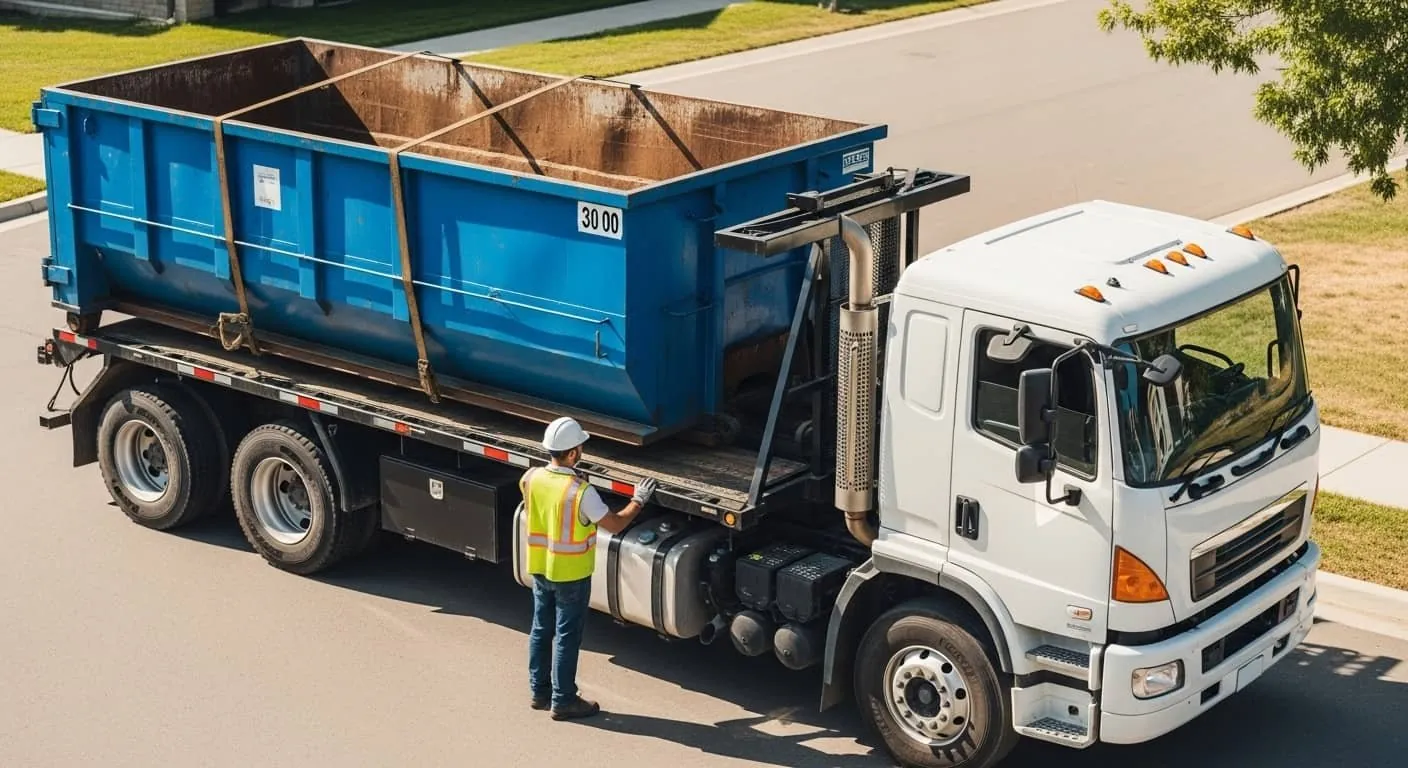
Every load we haul out of a driveway in Mooresville ends up somewhere specific. Not "the dump" — there is no single dump. One 20-yard load can get split across four destinations before the week is out, and the difference between those destinations is the difference between a fair invoice and a painful one. Since 2013, the question I get most after "what size do I need" is some version of "where does this actually go?" Here is the honest answer, stream by stream, plus the things North Carolina legally bans from landfills.
Three streams, three very different destinations
Debris in this region moves through three broad channels. Knowing which one your material belongs to explains almost everything about cost and handling.
1. Municipal solid waste (MSW)
Household garbage and mixed junk — bagged trash, furniture, carpet, clothing, general clutter. MSW goes to a transfer station first, where it is tipped onto a floor, consolidated, and reloaded into a walking-floor trailer. From there it rides to a lined MSW landfill: a cell built with a synthetic liner, leachate collection, groundwater monitoring wells and gas control. That engineering is expensive, which is why per-ton rates on MSW run higher than on clean C&D. Most of what comes out of an estate cleanout starts here.
2. Construction and demolition (C&D) debris
Framing lumber, drywall, shingles, siding, subfloor, cabinets, trim, non-hazardous demo material. C&D goes to a C&D landfill, permitted differently and typically tipping at a lower rate than lined MSW. That is why we care about keeping a container clean — a roofing tear-off load of nothing but shingles, felt and nails is predictable. Throw three bags of kitchen trash and a recliner on top and you have turned a C&D load into an MSW load. Same debris, higher category.
3. Recovered recyclables
Anything with a second life. Cardboard and containers head to a materials recovery facility (MRF), where optical sorters, magnets, eddy-current separators and human sorters pull the stream into baled commodities. Metal goes to a scrap yard and sells by weight. Brush and clean wood go to a mulch and compost yard. Concrete, block and brick go to a crusher and come back out as road base and driveway aggregate.
The scale house: why sorting is money, not virtue
Roll-off disposal is billed by weight. The truck crosses a certified scale loaded, tips, and crosses again empty. The difference is your net tonnage, times that facility's per-ton rate for that material category. Our pricing is flat-rate with a tonnage allowance built in and the overage rate stated before we drop a can — but the physics do not change.
Two loads of identical volume can differ by tons. Wet drywall and soaked carpet weigh a fortune; sorted cardboard weighs almost nothing. Pull the scrap metal out of a demo pile and you have removed billable weight and created something a scrap yard will pay you for. Keep brush separate from framing lumber and it goes to a mulch yard instead of a landfill cell. That is not environmental theater — that is a smaller invoice. We break the mechanics down in our guide to dumpster rental cost in Mooresville and the size math in what size dumpster do I need.
One more scale-house reality: concrete, brick, block, dirt and asphalt max out a container's legal road weight long before they fill it. That is why we run those jobs in a 10-yard can on a dedicated heavy debris program instead of a big box — and why clean concrete has to stay clean, because crushers will not take it mixed with trash.
North Carolina's landfill disposal bans, item by item
The state has pulled a specific list of items out of landfill disposal over the past three decades. These are not suggestions — facility operators inspect loads, and banned material gets rejected or surcharged. NCDEQ maintains the current list. Here is what it covers and why.
- Whole scrap tires — they trap air, float back to the surface of a cell and breed mosquitoes. Processed into crumb rubber and tire-derived fuel.
- Lead-acid batteries — lead and sulfuric acid. Nearly 100% recoverable, and retailers take them back.
- White goods and appliances — refrigerators, freezers, washers, dryers, ranges, water heaters. Heavy steel content, plus refrigerant and mercury switches that must come out first.
- Used oil and used oil filters — one gallon contaminates an enormous volume of water. Re-refined into base oil.
- Yard trash in lined landfills — leaves, limbs and grass generate methane and leachate when buried. Composted or ground into mulch.
- Fluorescent tubes and HID lamps — mercury vapor. Crushed lamps release it directly.
- Aluminum cans — recycling aluminum uses a fraction of the energy of smelting new metal, and cans have real commodity value.
- Wooden pallets — bulky, void-forming, and easily repaired or ground into boiler fuel and mulch.
- Oyster shells — reserved for coastal reef restoration, a genuinely North Carolina rule.
- Antifreeze — ethylene glycol is sweet-tasting and toxic to pets and wildlife. Recyclable.
- Computer equipment and televisions — the electronics ban covers CPUs, monitors, laptops, printers and TVs. Leaded CRT glass, mercury backlights, recoverable copper and gold.
- Other batteries — rechargeable and lithium-ion cells are a live fire risk in a packer truck or a tipping floor pile.
If one of these turns up in a can we haul, we pull it and route it correctly — but if you know it is coming, tell us at booking. Our fuller allowed-materials list lives in what can go in a dumpster in Iredell County.
What Iredell County and the Town of Mooresville actually offer
Residents here have more options than most people realize. Iredell County operates solid waste convenience centers around the county where residents can drop household garbage and a range of recyclables — cardboard, containers, scrap metal, used oil, and typically appliances and tires under separate handling. Locations, hours and eligibility rules change, so check the county site before you load the truck.
Inside town limits, the Town of Mooresville runs curbside garbage, recycling and yard-waste collection on set routes, plus a bulky-item pickup program for the couch or mattress that will not fit in a cart. The county and town also host periodic household hazardous waste collection events — the right destination for solvents, pesticides, pool chemicals and leftover paint — along with e-waste drop-off days. Those are scheduled, not year-round, so watch the calendars.
A roll-off makes sense for volume and speed: a whole-house cleanout, a remodel, a demolition, anything that would otherwise take fifteen trips. Curbside handles the trickle; we handle the flood. See our full service list.
Where does this actually go? The awkward-stuff table
| Item | Where it goes | Why |
|---|---|---|
| Leftover latex paint | Dry it out solid (kitty litter or hardener) and it can go with regular trash; liquid paint to an HHW event or paint-stewardship drop-off | Liquid paint is banned from the can and messy on a tipping floor |
| Oil-based paint, solvents, thinner | Household hazardous waste collection event only | Flammable and toxic |
| Motor oil and oil filters | Auto parts retailers and county convenience centers | State disposal ban; re-refined |
| Antifreeze | Auto parts retailers, HHW events | State disposal ban; toxic |
| Propane cylinders | Tank exchange cages at hardware and grocery retailers | Pressurized vessels explode in compactors |
| Tube TVs, monitors, computers | E-waste collection events and retailer take-back programs | NC electronics ban; leaded CRT glass |
| Refrigerators, freezers, AC units | Certified refrigerant recovery first, then scrap metal | Freon must be legally reclaimed before crushing |
| Washers, dryers, ranges, water heaters | Scrap metal yard or convenience center white-goods pad | White-goods ban; high steel value |
| Mattresses and box springs | Bulky-item pickup, or in the can with advance notice | Springs damage equipment; some facilities surcharge |
| Tires | The retailer that sells you the new ones; county tire program | Whole-tire ban |
| Scrap metal (any kind) | Scrap yard — separate it and get paid | Real commodity value, and it is weight off your load |
| Brush, limbs, leaves | Mulch and compost yard, or town yard-waste collection | Yard trash banned from lined landfills |
| Concrete, block, brick, asphalt | Crusher; comes back as aggregate and road base | Fully recoverable if kept clean |
| Clean corrugated cardboard | MRF via curbside or convenience center | Highest-value, easiest commodity in the stream |
| Fluorescent tubes and HID lamps | HHW events, some retailers | Mercury |
How much of a job is genuinely recoverable
On a typical remodel or teardown, a real share of the tonnage is not garbage. Concrete and masonry are almost entirely recoverable. Metal — ductwork, appliances, copper, conduit, flashing, steel — is recoverable and sellable. Clean untreated lumber can be ground. Cardboard from new fixtures is pure MRF feedstock. What genuinely belongs in a C&D cell is drywall scrap, treated and painted wood, insulation, mixed plastics and composites.
Good sorting is not about a number on a certificate. It is three things: fewer tons on the scale ticket, fewer banned items caught at the gate, and material going where it has value instead of where it costs you — whether that is a construction job, a commercial turn or a Saturday residential project. The jobsite version is in construction debris disposal around Lake Norman.
The Lake Norman angle nobody thinks about
Mooresville draws its drinking water from Lake Norman, and that should change how you handle liquids. A storm drain at the end of a driveway is not a treatment system — it is a pipe to a creek that runs to the lake. Paint rinse water, oil, antifreeze, solvent and concrete slurry poured down a curb inlet arrive downstream essentially untreated. The EPA has spent decades on this because it is the hardest pollution to fix after the fact.
Practical version: never pour anything into a storm drain, keep liquids sealed until an HHW event, and cover a can holding drywall or ash if heavy rain is coming — wet debris weighs more and leaches more. Keeping the pad clean matters too; see our notes on driveway protection during delivery.
How we handle it so you do not have to
Cody Brawley started Race City Dumpster Rental in 2013 and the policy has not changed: we route material to the right facility instead of dumping everything into the cheapest hole. Metal goes to scrap, brush to mulch, concrete to the crusher, cardboard to the MRF. You load the can; we deal with the destinations, the scale house and the paperwork.
Planning a project in Mooresville, Davidson, Troutman or anywhere else in our Lake Norman service area? Call (980) 447-6076 or use the contact page and we will tell you straight — what to keep out of the can, what is worth separating, and what size to put on the driveway. Flat-rate, licensed and insured, locally owned since 2013.
Questions this guide did not answer? Call (980) 447-6076. We would rather spend two minutes on the phone than have you order the wrong container.