
Waste Guide
What Can (and Can't) Go in a Dumpster in Iredell County
A Mooresville hauler's straight list of what's accepted in a roll-off, what's banned and why, North Carolina's landfill disposal bans, and exactly where each prohibited item goes in Iredell County.
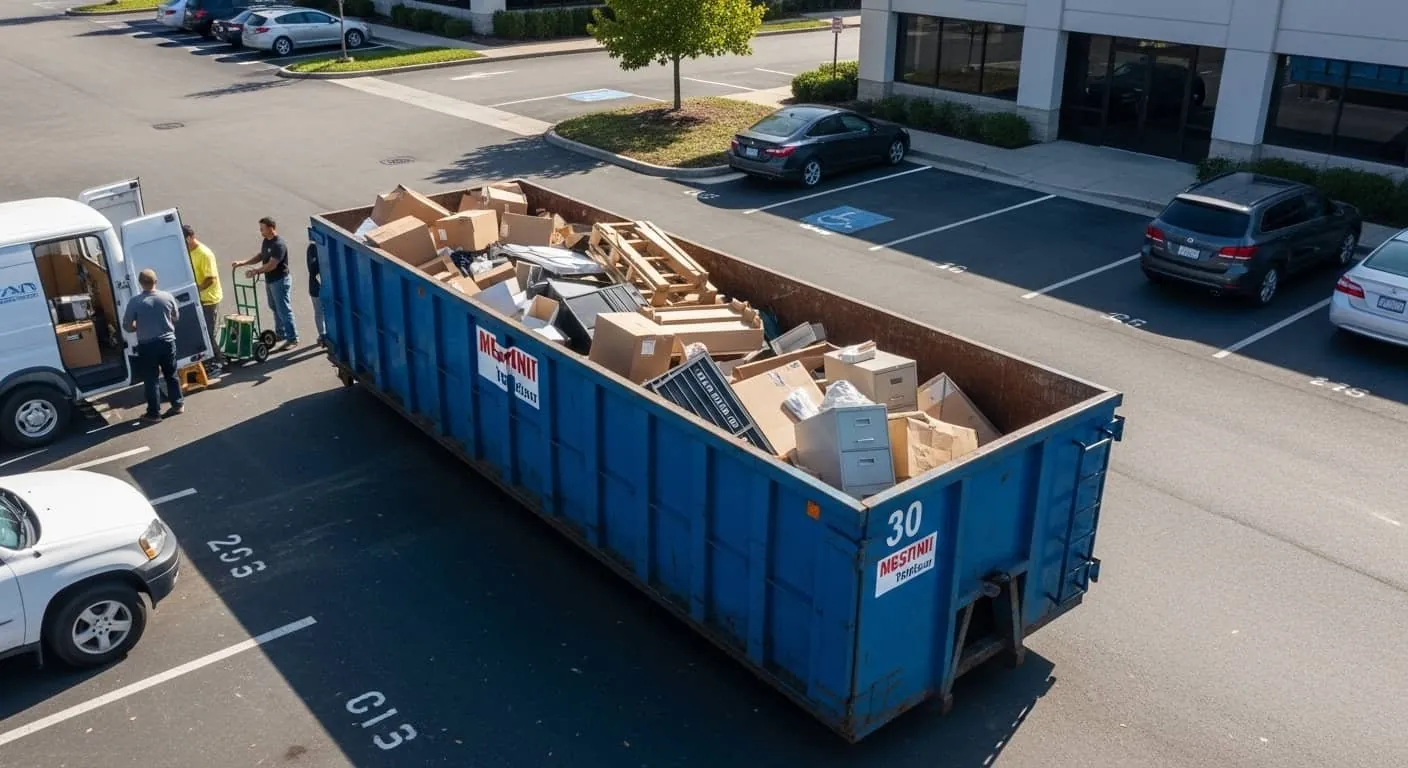
After thirteen years of setting roll-offs in driveways from Brawley School Road out to Troutman, I can tell you the question I answer most often isn't about size and it isn't about price. It's some version of "hang on, can I throw that in there?" It usually comes at 4:30 on a Friday with half a garage already in the can.
The honest answer: roughly 95% of what comes out of a house, a rental turnover, or a jobsite in Iredell County is fine. It's the other 5% that gets expensive, and not because we're picky. North Carolina has hard landfill disposal bans, the scale house at the transfer station enforces them, and any contamination charge they write on our ticket lands on your invoice. Here's the real list, the reasons behind it, and where the banned material actually goes.
What's always accepted
If it came out of a building and it isn't liquid, pressurized, poisonous, or specifically banned by the state, it goes in the box.
Household junk and cleanout material
Couches, recliners, mattresses and box springs, dressers, dining sets, that particle-board bookshelf that fell apart on the way down the stairs. Clothing, toys, books, kitchenware, small appliances, exercise equipment, carpet and pad pulled out of a bedroom. Whole-house and garage cleanouts are our steadiest work — if you're clearing a property after a sale or a passing, the estate cleanout service and our room-by-room cleanout checklist will save you four trips to the curb.
Appliances without refrigerant
Washers, dryers, dishwashers, electric and gas ranges, water heaters, microwaves, and range hoods are all fine. These count as "white goods" under state rules, which means they can't be buried in a landfill — but they don't need to be. We pull them and send them to a scrap metal yard, which is where they should have gone anyway. Anything with a compressor and a sealed refrigerant loop is a different animal, and I cover that below.
Construction and remodeling debris
Dimensional lumber, plywood, OSB, drywall and joint compound, trim, doors, windows, cabinetry, laminate and stone countertops, tile, hardwood, LVP, subfloor, insulation, vinyl and fiber cement siding, deck boards, joists, pressure-treated fence panels and posts. Asphalt shingles, felt, drip edge, and nails are standard — an 1,800 square foot tear-off usually needs a 20 yard, and the roofing tear-off size guide breaks that math down by square. For framing, gut jobs, and additions, a construction dumpster sized to the phase of the job beats overfilling a small can.
Brick, block, concrete, dirt and stone
Accepted, but only in a dedicated heavy can. Concrete runs roughly 4,000 pounds per cubic yard. A 20 yard box full of it would put a truck well over legal axle weight, and I'm not putting my CDL on the line for that. Clean masonry goes in a 10 yard dumpster loaded no higher than the halfway mark, and it has to stay clean — no wood, no trash, no tangled rebar — because it's headed to a crushing and recycling facility, not the landfill. That's the whole point of our concrete and heavy debris service.
Yard debris
Limbs, brush, leaves, shrubs, sod, small stumps, and storm cleanup from the last round of Lake Norman wind. Keep it separated from household trash when you can, because yard waste is banned from lined municipal landfills in North Carolina and a clean load can go to a mulch and compost facility instead. Our yard waste removal loads run cheaper for exactly that reason.
Non-hazardous commercial waste
Retail fixtures, office furniture, pallets, restaurant equipment, shelving, packaging, and warehouse cleanout material are all routine.
What we can never take, and why
- Wet paint, stains, solvents and thinners. Liquids leach, and paint thinner is an ignitable hazardous waste. Latex paint dried rock solid with kitty litter or hardener, lid off so the driver can see it, is acceptable. Oil-based never is.
- Motor oil, antifreeze, gasoline, diesel, hydraulic fluid. One tipped jug contaminates the whole box and the ground under it. Antifreeze is also acutely toxic to pets and wildlife.
- Pesticides, herbicides and pool chemicals. Concentrated chlorine and acid can react with each other inside a hot metal box. I have watched a can start smoking on a driveway.
- Asbestos-containing material. Old popcorn ceiling, 9x9 floor tile, pipe wrap, transite siding. Federal rules require licensed abatement and specific disposal — this one is a legal problem, not a preference.
- Propane tanks and any pressurized cylinder. Grill bottles, helium, oxygen, refrigerant jugs, aerosols by the case. They explode in the compactor at the transfer station.
- Lithium-ion and lead-acid batteries. Lithium cells are now a leading cause of fires in the waste industry — a crushed laptop or e-bike pack can ignite hours later, in the truck or in the pile. Lead-acid is a state-banned toxic.
- Medical and biohazard waste. Sharps, red-bag material, and pharmaceuticals require a regulated waste stream.
- Tires. Whole scrap tires are banned statewide, and they work their way back up through landfill cover.
- Refrigerators, freezers, window AC units, dehumidifiers, heat pumps. Refrigerant has to be recovered by a certified tech under the Clean Air Act before the shell can be scrapped.
- Railroad ties and creosote-treated timber. Creosote is a regulated wood preservative and disposal facilities in this region reject it on sight.
- Contaminated soil. Anything from around a leaking tank or a spill needs a waste profile and a permitted facility.
| Goes in the can | Never goes in the can |
|---|---|
| Furniture, mattresses, household junk | Wet paint, stains, solvents |
| Washers, dryers, ranges, water heaters | Fridges, freezers, window AC, dehumidifiers |
| Drywall, lumber, cabinetry, flooring, carpet | Asbestos siding, floor tile, pipe wrap, popcorn ceiling |
| Asphalt shingles, felt, decking, fencing | Railroad ties and creosote timbers |
| Brick, block, clean concrete (heavy can only) | Contaminated or petroleum-soaked soil |
| Brush, limbs, leaves, sod | Tires, propane tanks, any pressurized cylinder |
| Office furniture, fixtures, pallets, packaging | Batteries, computers, TVs, fluorescent tubes |
| Dried-solid latex paint with the lid off | Motor oil, fuel, antifreeze, pesticides, pool chemicals |
North Carolina's landfill bans — the part people don't expect
This is the local detail that catches out-of-state contractors every time. North Carolina doesn't just discourage certain materials; state law prohibits them from landfill disposal, and the North Carolina Department of Environmental Quality enforces it through facility permits. The banned list includes whole scrap tires, lead-acid batteries, white goods and appliances, used oil and used oil filters, yard trash in lined MSW landfills, fluorescent and HID lamps, aluminum cans, wooden pallets, oyster shells, and — the one that surprises everybody — discarded computer equipment and televisions under the state's electronics disposal ban.
That electronics ban is why one old tube TV tossed in with a garage cleanout can hold up an entire load. It isn't a judgment call for the scale operator. Their permit doesn't allow it.
| Banned item | Where it goes instead |
|---|---|
| TVs, monitors, computers, printers | County convenience center e-waste area or retailer take-back |
| Lead-acid car and marine batteries | Any auto parts store — most pay a core credit |
| Lithium-ion tool and device batteries | Hardware and electronics retailer drop boxes |
| Used motor oil and oil filters | Convenience center oil tank or a quick-lube shop |
| Whole scrap tires | Tire retailer or county tire collection, small per-tire fee |
| Fridges, freezers, AC units | Appliance recycler who pulls and documents the refrigerant |
| Fluorescent tubes and HID lamps | Home center lamp recycling bins |
| Paint, solvents, pesticides, pool chemicals | Household hazardous waste collection event |
Where this stuff actually goes around here
Iredell County operates solid waste convenience centers that accept scrap metal, used oil, electronics, and other banned recyclables from county residents, and the county periodically hosts household hazardous waste collection days for paint, chemicals, and fuels. Hours and accepted items change, so call ahead. Inside town limits, the Town of Mooresville handles curbside recycling and bulky item collection on its own schedule, which is separate from anything the county runs.
Beyond that: auto parts stores take lead-acid batteries and used oil, tire shops take tires for a few dollars each, scrap yards on the Statesville side pay cash for appliance shells and metal, and licensed appliance recyclers will pull refrigerant and hand you the documentation. I keep a running list of who's currently taking what in our Iredell County recycling and disposal guide.
Mixed loads: how one small item becomes a fee
Here's the mechanic nobody explains until it costs them. We don't sort your load at the curb — we tarp it and haul it to a transfer station, where it gets dumped on a tipping floor and inspected. If the spotter finds a paint can, a television, a propane bottle, or a battery, the whole load can be flagged as contaminated. Depending on the facility and the item, that means a special-handling charge, a reload, or in the worst case the load coming back on the truck.
Flat-rate pricing means you know the number before we show up, and contamination fees are the one thing that can move it. They are also completely avoidable. Pull the five or six banned items out before delivery, stage them in a corner of the garage, and handle them separately.
Loading so nothing gets kicked back
- Keep everything below the top rail. Anything above the fill line can't be tarped, and an untarped load isn't legal on Highway 150.
- Break down cabinets, doors, and furniture. Flat material stacks; intact material traps air, and you're paying to haul that air.
- Heavy on the bottom, light on top, weight spread front to back rather than piled against the door.
- Run masonry, dirt, and shingles as their own load instead of mixing them into general debris.
- Bag loose insulation, ceiling texture, and fine dust so it doesn't blow out on the road.
- If a banned item ends up in there by mistake, flag it for the driver at pickup. Fixing it in the driveway costs far less than fixing it on the tipping floor.
When in doubt, ask before you throw
Thirty seconds on the phone beats a contamination charge every time. We cover Mooresville, Davidson, Cornelius, Huntersville, Troutman, Statesville, and the rest of the Lake Norman area — the full list lives on our service area page, and you can reach us any day of the week through the contact page. Describe what you're throwing away and we'll tell you straight whether it's fine, whether it needs its own can, or where in the county to take it.
Ready to book, or want a straight answer on a strange pile? Call Race City Dumpster Rental at (980) 447-6076. Cody and the crew have been running roll-offs in Race City since 2013, we're licensed and insured, pricing is flat-rate with no surprise tonnage games, and same-day delivery is usually on the table if you call before noon.
Questions this guide did not answer? Call (980) 447-6076. We would rather spend two minutes on the phone than have you order the wrong container.