
Construction
Construction & Renovation Debris Disposal in the Lake Norman Area: A Contractor's Playbook
A working contractor's guide to jobsite debris around Lake Norman: why Piedmont clay and masonry blow past tonnage limits, how to phase containers with swap-outs, and which materials get a load rejected.
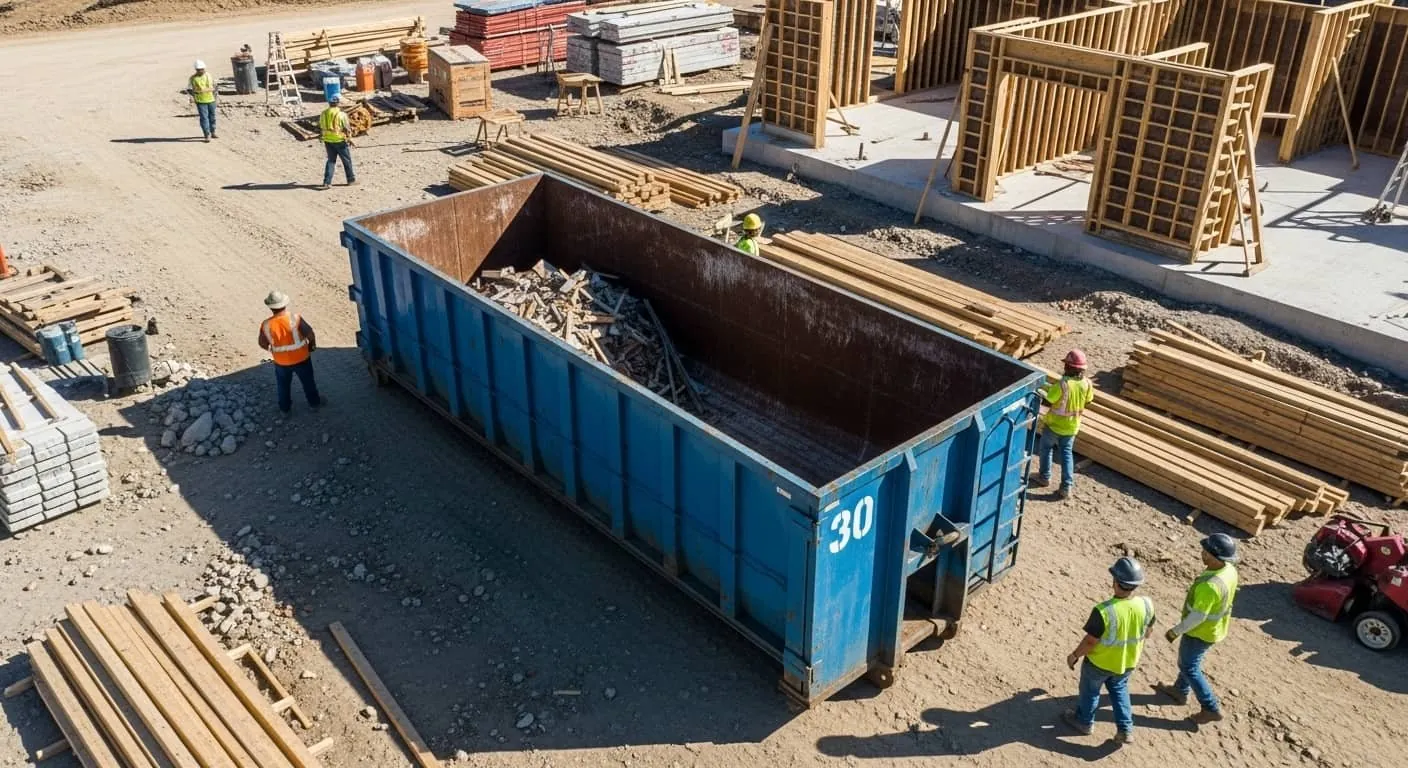
Jobsite waste is one of the few line items on a build you can actually control, and it is the one most crews leave to chance. Around Lake Norman the math is unforgiving: red clay, brick and block make a container heavy long before it looks full, tipping fees are charged by the ton at the scale, and one rejected load can cost a framing crew half a day. After twelve-plus years hauling for builders in Mooresville, Davidson, Cornelius, Huntersville, Troutman and Statesville, the patterns repeat. This is the playbook we give our contractor accounts.
C&D Debris Is Not Municipal Solid Waste — And It Does Not Go to the Same Place
Construction and demolition debris is its own regulated waste stream in North Carolina. Wood, drywall, roofing, siding, brick, block, concrete, insulation, carpet, cabinets, windows and pipe coming out of a structure are C&D. Household trash, food waste and office garbage are municipal solid waste. They go to different permitted facilities under different rules, and they carry different per-ton rates. Sorted, clean C&D generally tips cheaper than mixed MSW.
The practical consequence: the second a crew throws lunch bags and jobsite office trash into the C&D can, you risk having the load reclassified at the gate at the higher rate. Keep a lidded 55-gallon barrel by the porta-john for crew garbage. It is the cheapest disposal decision on the job. The North Carolina Department of Environmental Quality sets the framework for how these facilities are permitted and what they can accept.
The Piedmont Weight Problem: Red Clay, Brick and Block
Iredell County sits on dense Piedmont red clay. Wet, it runs roughly 2,800 to 3,000 pounds per cubic yard. A 20-yard roll-off that looks two-thirds empty with clay spoil, footing dirt, chimney brick and busted slab in the bottom can already be sitting at 8 to 10 tons — several times the tonnage allowance included with a general-debris rental.
That is the single most expensive mistake we see. The fix is simple and it is not a bigger can. Heavy inert material belongs in a dedicated 10-yard heavy-debris container rented as a concrete and heavy debris load, filled level with the rails and nothing else in it. A 10-yard box holds all the concrete a truck can legally carry off your lot. Mixing brick and clay into a big general-debris can gets you overage charges; keeping them separate can also get clean concrete recycled instead of landfilled.
What Common Jobsite Materials Actually Weigh
| Material | Typical Weight | Fills a 10-yd Can At |
|---|---|---|
| Wet red clay / footing spoil | ~2,800–3,000 lb per cubic yard | About 3–4 yards |
| Broken concrete or slab | ~3,800–4,000 lb per cubic yard | About 2.5–3 yards |
| Brick and CMU block | ~2,600–3,200 lb per cubic yard | About 3–4 yards |
| Asphalt shingles | ~230–250 lb per square (3-tab), 300+ lb architectural | ~25–30 squares of tear-off |
| Drywall scrap | ~500–600 lb per cubic yard | Volume-limited, not weight |
| Framing lumber and clean wood | ~300–400 lb per cubic yard | Volume-limited, not weight |
| Mixed remodel debris | ~350–500 lb per cubic yard | Volume-limited, not weight |
Read that table as a sorting instruction, not trivia. Anything in the top three rows goes in its own small can. Everything below fills up before it gets heavy, which is why a 30-yard roll-off makes sense for bulky framing and finish waste and makes no sense at all for masonry.
Sequence Containers by Phase — Then Swap, Don't Oversize
The instinct is to drop the biggest box on day one and let it ride. On a Piedmont job that costs you money twice: you pay for volume you are not using early, and you end up with mixed heavy and light debris in one can. Sequence it instead.
- Demo phase. Heaviest and dirtiest. Run a 10-yard for masonry, tile, plaster and slab; run a 20-yard alongside it for cabinets, carpet, lath and general demolition debris. Two small cans beat one giant overweight one.
- Framing and rough-in. Bulky and light — cutoffs, sheathing scrap, housewrap, pipe and conduit offcuts, cardboard. This is 20- or 30-yard territory, and it is where swap-outs earn their keep. Call it in the afternoon before it is topped out and the empty box is there in the morning.
- Finish phase. Drywall scrap, trim, packaging, flooring offcuts, paint buckets and endless cardboard. A 15- or 20-yard usually carries it, and one final swap covers punch-list cleanup before the walk-through.
Swap-outs are the whole strategy. You are paying for hauls, not for the privilege of owning the biggest container in the neighborhood. If you are unsure how to phase a specific project, our dumpster size guide for Mooresville jobs walks through it, and our construction dumpster rental page lays out how phased delivery works on an active site.
Two Very Different Debris Profiles Around the Lake
A lakefront remodel off Brawley School Road and a spec build in a Langtree subdivision generate almost nothing alike.
Lakefront and Older Mooresville Renovations
Waterfront homes from the 1970s and 80s and the old mill houses off Main and Center Avenue bring heavy, mixed, dirty debris: cast iron, plaster, tile, chimney brick, dimensional lumber, sometimes a slab or a stacked-stone retaining wall. Lots are tight, driveways are steep and narrow, and mature hardwoods limit where a truck can set a can. Expect more weight per cubic yard than you would guess and plan for two smaller containers instead of one large one. Roof tear-offs on these houses are frequently two and three layers deep.
New Subdivision Builds
Along NC-115, Langtree Road and the corridors north toward Troutman, new construction debris is light and bulky: OSB, engineered lumber cutoffs, vinyl siding scrap, drywall, cardboard and packaging by the pallet-load. Volume runs high, weight runs low, driveways are new and uncured. Big cans, frequent swaps, and protect the concrete.
Placement, Access and Protecting New Concrete
A loaded roll-off plus the truck runs 30,000 pounds and up on a small footprint. Fresh residential concrete is not rated for it. Always put plywood or plate down — we bring boards, and the reasoning is spelled out in our guide to driveway protection during dumpster delivery. Beyond that:
- Clear roughly 60 feet of straight backing room and about 23 feet of overhead clearance. Low limbs and sagging service drops are the two things that turn a delivery into a return trip.
- Set the can with the door end facing the work, not the street. Crews will walk the extra 40 feet all day rather than admit it was placed backward.
- On a tight lot, gravel pad or a leveled stone staging area beats the driveway every time.
- Keep the curb, sidewalk and utility boxes out of the swing path, and know whether the street is public or HOA-controlled before you plan a right-of-way drop.
Sort Metal, Clean Wood and Cardboard Out of the Can
Scrap steel, copper and aluminum are worth money at a scrap yard and worth nothing but weight in your dumpster. Pull ductwork, rebar cutoffs, cast iron tubs and conduit before the container fills. Break down cardboard so it lies flat instead of eating four yards of airspace. Clean, unpainted wood can often be handled separately at a lower rate. On a full remodel this shaves a haul off the job. Our overview of recycling and disposal options in Iredell County covers where the local streams go.
North Carolina Landfill Bans and the Rejected-Load Problem
North Carolina bans a specific list of items from landfill disposal, and several of them live on every jobsite. The ones that get contractors in trouble here:
- Fluorescent tubes and ballasts from a lighting retrofit
- Wooden pallets — extremely common on new construction
- Appliances and any unit containing refrigerant
- Electronics, including old thermostats, TVs and computers from an office buildout
- Tires, used oil, oil filters, antifreeze and lead-acid batteries
- Liquid paint, solvents and other liquid waste
A load with banned material in it gets flagged at the scale house. Then it comes back to your site, gets set down, and someone on your payroll picks through it. That is a lost day and a second haul fee. Stage banned items in a marked corner from day one. If you are unsure about a specific material, check our list of what can and cannot go in a dumpster in Iredell County or call before the truck rolls.
Pre-1980 Housing: Know When to Stop
Plenty of Mooresville and Statesville housing stock predates 1980, which means asbestos in floor tile, mastic, pipe wrap, popcorn ceilings and some siding, plus lead paint on trim and windows. Neither is dumpster material, and neither is something a demo crew handles casually. If a renovation involves disturbing suspect material, stop and bring in a licensed abatement contractor and a testing lab. Federal renovation, repair and painting requirements from the U.S. Environmental Protection Agency apply to pre-1978 housing, and worker-protection standards enforced by the North Carolina Department of Labor apply to your crew. Abated material leaves in a separate, documented, properly manifested load — never in a general C&D can.
Weather, Windows and a Clean Site
A clean jobsite passes inspection faster and hurts fewer people. Nails and cutoffs off the walking paths, one designated debris route to the container, and a broom pass before the inspector arrives.
Then there is Carolina weather. July and August afternoon storms fill an open-top can with water, and water is dead tonnage you pay for. Get heavy loads hauled before a storm cell, not after. Winter rain turns red clay into something a loaded truck cannot back through — on unpaved access we may need stone, or we may need to wait a day. Same-day is available and we run it constantly, but on a scheduled build, planned beats urgent.
Set Up a Standing Account
The builders who spend the least on disposal are the ones we already know. Standing accounts get priority scheduling, consistent flat-rate pricing across jobs, and a driver who knows which side of the lot to set the can on without being told. We handle commercial and multi-site accounts for GCs, remodelers and the motorsports and light-industrial shops around Race City, and we cover the full Lake Norman area — see the towns we serve for coverage from Huntersville to Statesville.
Cody Brawley has run Race City Dumpster Rental Mooresville since 2013 — licensed, insured, locally owned, flat-rate, with same-day delivery and swap-outs on active sites. Tell us the scope and the phase and we will tell you the right can, the right tonnage plan and the right swap schedule. Call (980) 447-6076 or use our contact page to set up your jobsite or open a builder account.
Questions this guide did not answer? Call (980) 447-6076. We would rather spend two minutes on the phone than have you order the wrong container.